Lab Grown Diamond Prices by Carat
Size is the biggest factor in lab diamond cost, so the clearest way to read lab diamond pricing is one carat weight at a time. At half a carat most lab grown diamonds here cost $165 to $305. At one carat the range is $405 to $915, at two carats it is $1,250 to $2,080, and even at five carats most stones cost $3,730 to $5,600. Each range is the middle 80 percent of the stones in stock at that size, which keeps a handful of unusual stones at either end from stretching it, and the table adds the median and what a natural stone of that size costs.
Lab grown diamond prices by carat, October 23, 2026: middle 80 percent of sale prices (10th to 90th percentile) and the median, stones within 0.10 carat of each size, all shapes
| Size | Lab grown, most stones | Lab median | Natural, most stones | Natural median | Lab saving at the median | Lab stones in stock |
|---|
| 0.5 carat | $165 to $305 | $215 | $400 to $1,010 | $605 | 65% | 55,526 |
| 1 carat | $405 to $915 | $555 | $1,240 to $4,630 | $2,390 | 77% | 244,409 |
| 1.5 carat | $800 to $1,550 | $1,060 | $3,060 to $10,800 | $5,740 | 82% | 201,325 |
| 2 carat | $1,250 to $2,080 | $1,580 | $6,430 to $22,400 | $12,500 | 87% | 154,055 |
| 3 carat | $2,240 to $4,320 | $2,760 | $16,900 to $51,700 | $31,200 | 91% | 112,958 |
| 4 carat | $2,900 to $6,250 | $3,660 | $28,800 to $97,800 | $53,800 | 93% | 56,071 |
| 5 carat | $3,730 to $5,600 | $4,660 | $42,200 to $167,000 | $83,200 | 94% | 45,899 |
The gap with natural widens as stones get bigger. A lab stone costs about 65 percent less than a natural one at half a carat, 77 percent less at one carat and 87 percent less at two. By four carats the median lab stone is $3,660 against $53,800 for natural. That is why so much of our lab inventory is large: nearly half of it, 629,445 of 1,310,378 stones, weighs 1.90 carats or more, while only about 5 percent of our natural stock is that big.
Each size has its own page with the full breakdown by shape and grade, from 1 carat and 2 carat up to 3 carat and 4 carat lab grown stones, and the table links the other sizes.
What Else Moves Lab Diamond Pricing
Grade matters less in lab grown than it does in natural. At one carat the median D to F stone with VVS2 or better clarity is $630, against $435 for G to H color with VS1 to SI1 clarity, a difference of about $200. At two carats those two groups sit at $1,710 and $1,190. Labs mostly grow colorless, very clean stones, and close to two thirds of our one carat lab inventory (156,555 of 244,409) is D to F with VVS2 or better clarity, so a top grade costs far less extra than it would in a mined stone.
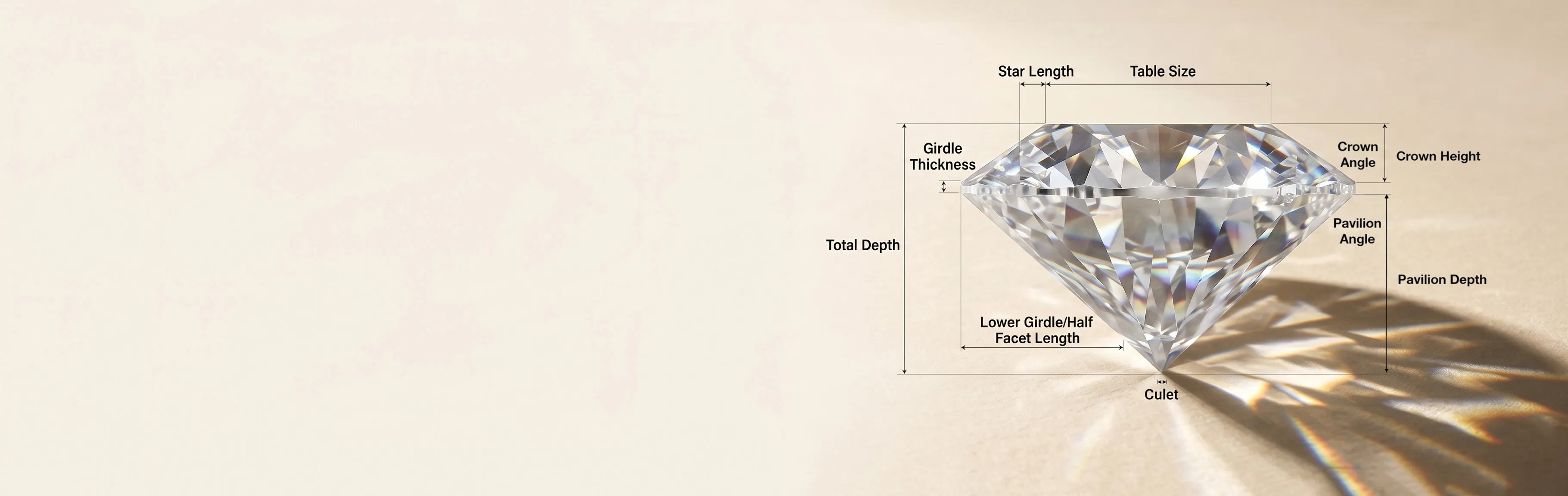
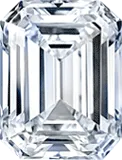
Shape works the other way from what most shoppers expect. A natural round usually costs more than other shapes of equal weight, yet at one carat the median lab round is $460, below the emerald at $575, the cushion at $620 and the oval at $655. At two carats a lab round runs $1,440 at the median, the emerald $1,530, the cushion $1,630 and the oval $1,710. If you like rounds, this is good news, and round lab grown diamonds are also the biggest single shape group at one carat, with 113,248 stones.
Median lab diamond price by shape and grade, October 23, 2026: 0.90 to 1.10 and 1.90 to 2.10 carats; shape rows cover every grade, grade rows every shape
| Shape or grade | 1 carat median | 2 carat median | 1 carat stones in stock |
|---|
| Round | $460 | $1,440 | 113,248 |
| Oval | $655 | $1,710 | 23,242 |
| Cushion | $620 | $1,630 | 14,770 |
| Emerald | $575 | $1,530 | 17,392 |
| D to F color, VVS2 or better | $630 | $1,710 | 156,555 |
| G to H color, VS1 to SI1 | $435 | $1,190 | 3,430 |
The grading report is the last piece. About 95 percent of our lab stock is graded by IGI (1,241,873 stones), with 50,417 GIA reports and 18,062 from GCAL. Whichever lab graded a stone, its report number lets you look the grades up yourself before you buy, and the report states whether the stone was grown by CVD or HPHT and whether it was treated after growth.
Where to Buy Lab Diamonds
National jewelry chains, online retailers and local stores all sell lab grown stones now, and one diamond can be priced very differently from one seller to the next. As you narrow down where to buy lab diamonds, ask for three things before you pay: the grading report number, a video of the actual diamond rather than a stock image, and a return window long enough to see the stone in person. A seller that can't give you all three is asking you to take its word for the grade.
Rare Carat is a direct retailer and the merchant of record on every order, with more than 2 million natural and lab diamonds in stock. Of those, 1,310,378 are lab grown, 1,087,059 of them filmed in 360 HD video, and every one has an IGI, GIA or GCAL report along with our AI price and quality scores, which show how a stone's price compares with similar stones before you choose. Our gemologists are on hand to help with anything you need and earn no commission, so their advice isn't tied to what you spend. Once you place an order, our New York staff inspect the diamond under a microscope and check its laser inscription against the report before it ships.
Every order ships free and insured, and you get 30-day returns, free resizing in the first year and a lifetime manufacturing warranty on rings. You can pay over time with Affirm, Klarna, Afterpay, PayPal Pay Later or Katapult. Shoppers rate Rare Carat 5 out of 5 on both Google and Trustpilot, and on Trustpilot it is the highest rated jewelry brand in America.
Choosing a Lab Grown Diamond
Because carat weight drives lab diamond cost and grade adds little, the usual advice for natural stones turns around. Pick the size you want first, then look at cut, since an Excellent or Ideal cut is what makes the stone bright. Color and clarity come last: G or H color with VS1 to SI1 clarity looks clean and white to most eyes, and moving up to D to F with VVS2 or better adds only about $200 at one carat and about $520 at two.
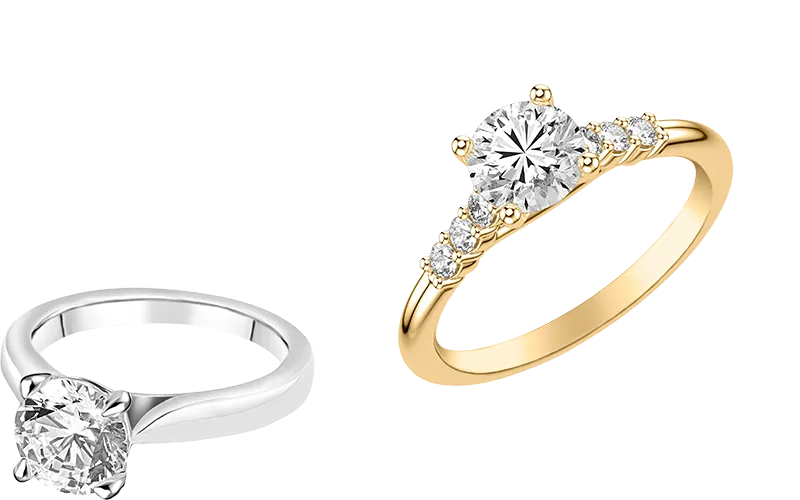
If the diamond is going into an engagement ring, you can choose the stone here and then the setting, or start from lab grown diamond engagement rings and pick a center stone for the design you like. Either way, the price you see on each stone is the price you pay, with the current savings already applied.
Prices and counts are from Rare Carat inventory on October 23, 2026: sale prices with the current savings applied, all shapes unless a shape is named, D to K color, FL to SI2 clarity, Good cut or better, graded by GIA, IGI or GCAL, with or without video. Each size row covers stones within 0.10 carat of the size shown. "Most stones" means the middle 80 percent (10th to 90th percentile). Prices are rounded: under $1,000 to the nearest $5, under $10,000 to the nearest $10, under $100,000 to the nearest $100.