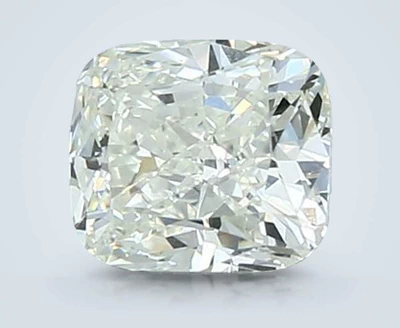
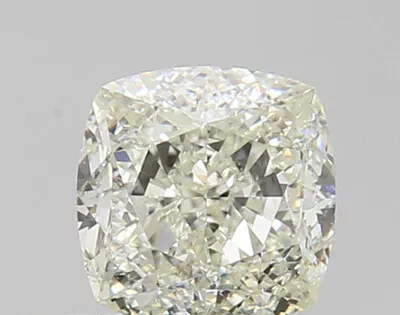
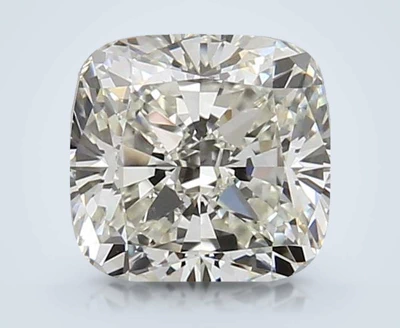
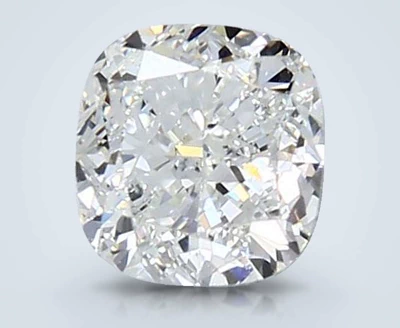
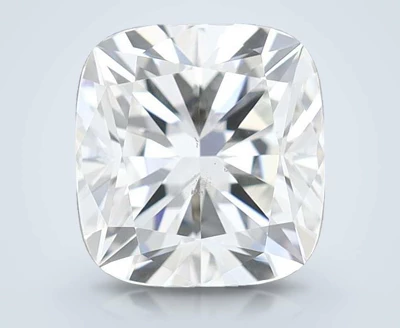
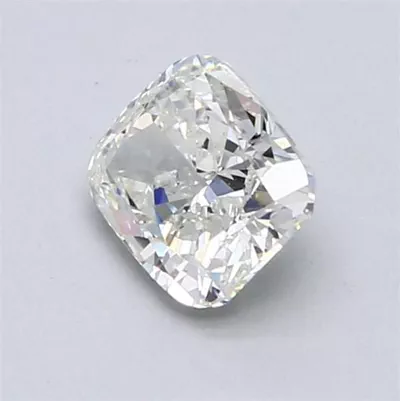
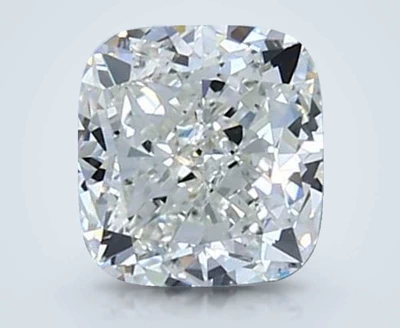
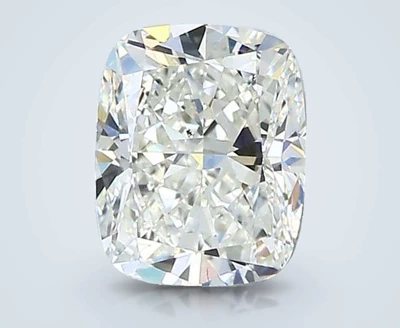
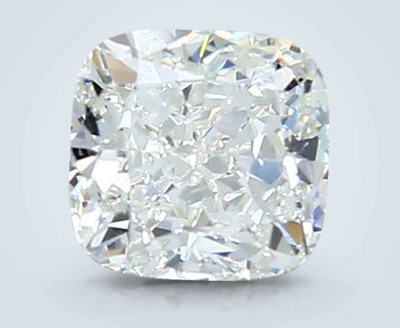
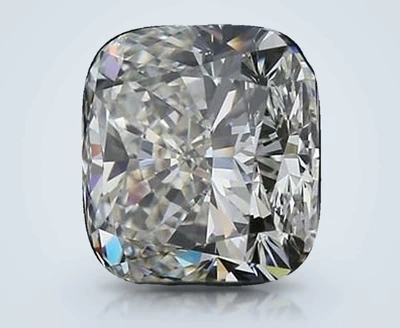
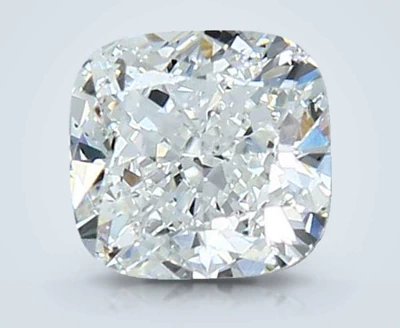
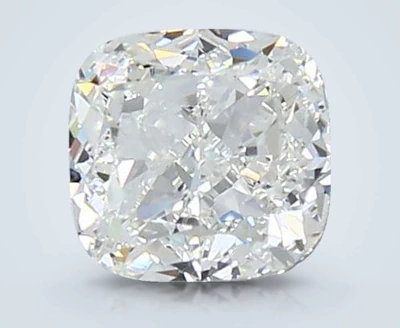
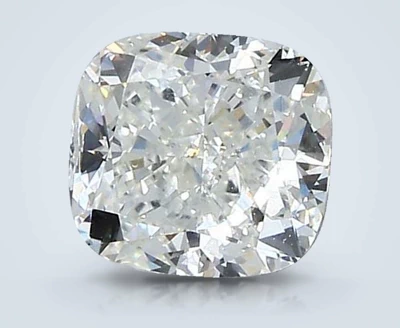
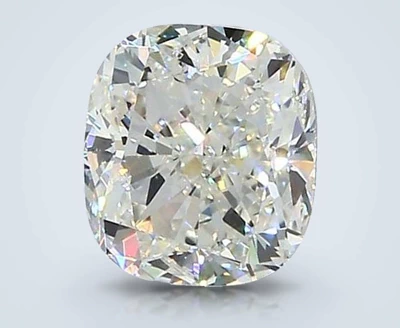
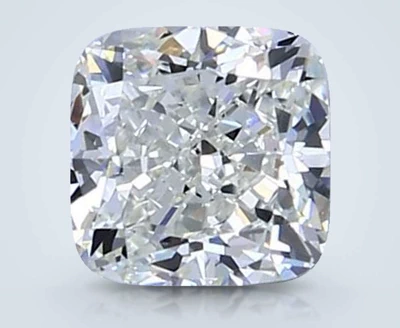
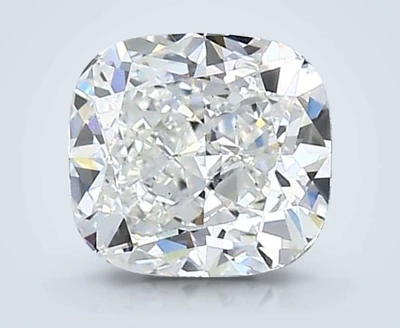
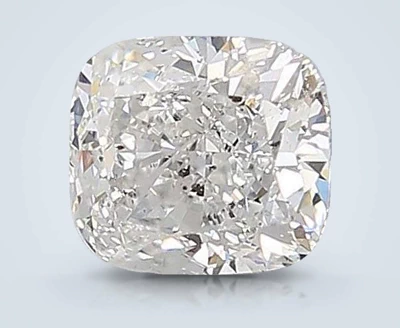
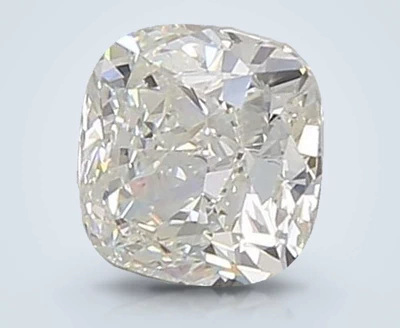
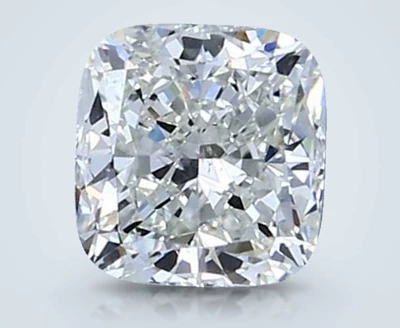
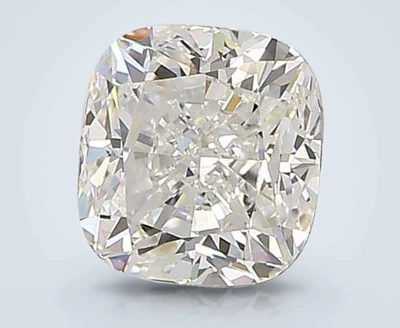
What a Cushion Cut Diamond Costs, Square or Elongated
A cushion diamond at Rare Carat starts at $150 natural and $130 lab grown with the current savings applied, across the 114,194 cushions on this page (27,837 natural, 86,357 lab grown, every carat weight). The figure that matters for an engagement ring is the one carat band: a natural cushion between 0.90 and 1.10 carats starts at $505 and has a median of $1,985, against $2,834 for a natural round of the same weight, while a lab cushion in that band starts at $390 with a median of $619. The figures are drawn from inventory on October 17, 2026 and refreshed regularly.
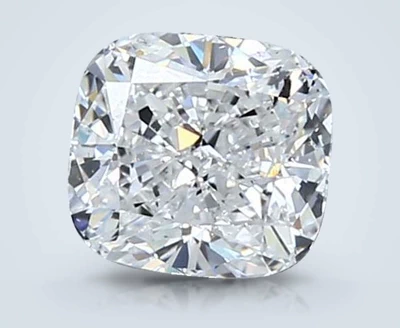
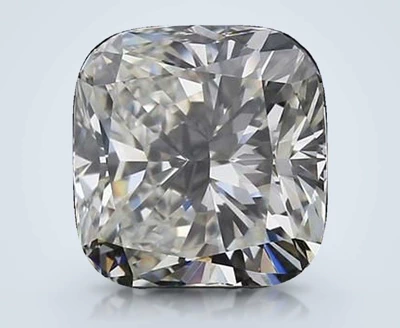
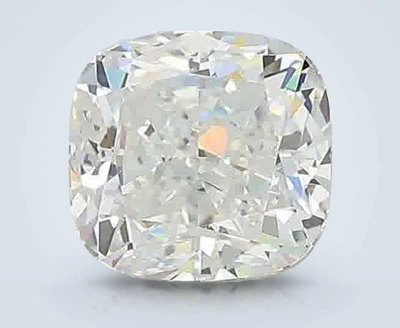
The cushion discount against round is the shape's main argument, and it comes with two trade-offs a buyer should know before the tables: a cushion carries weight in its depth, so it faces up smaller than a round of the same carat (about 5.5 to 6 mm at one carat against 6.5 mm), and its faceting holds body color, so a cushion needs a color grade higher than a round to look as white. Neither is a flaw; they are the terms of the deal.
Square, Slightly Rectangular or Elongated: The Ratio Decides the Look
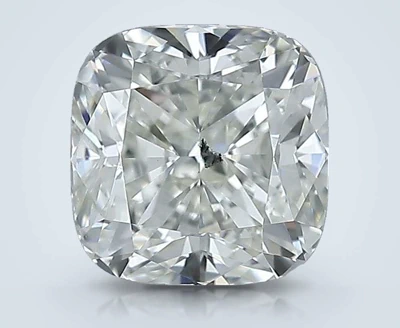
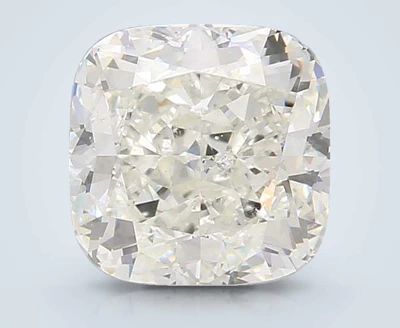
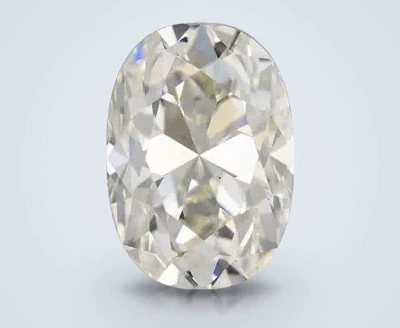
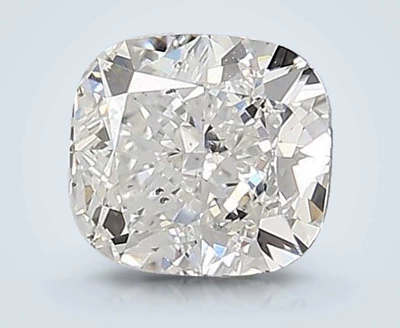
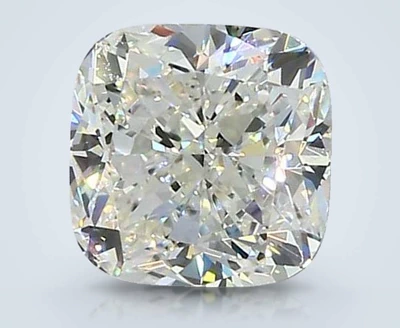
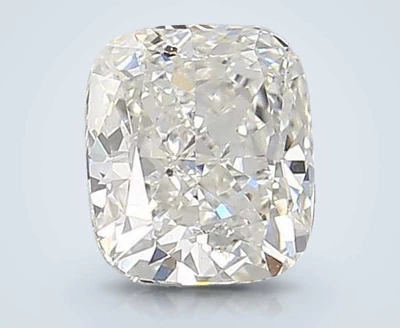
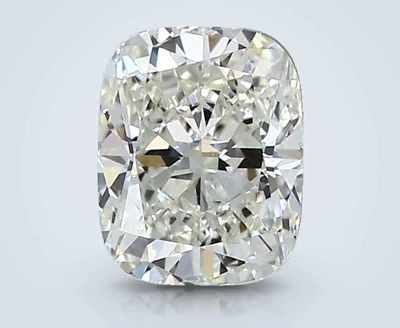
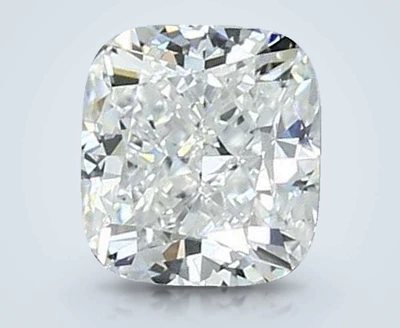
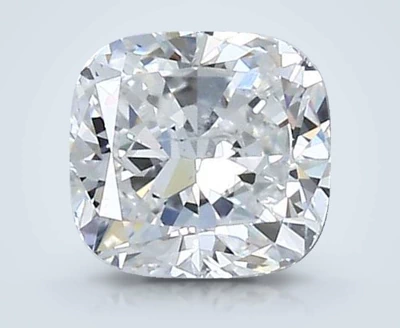
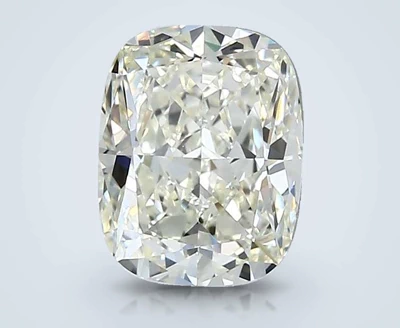
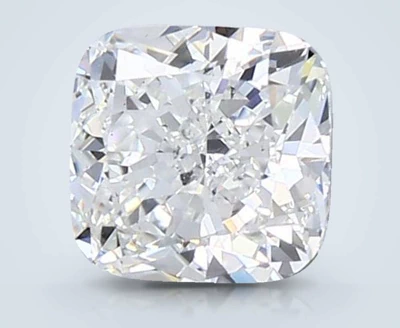
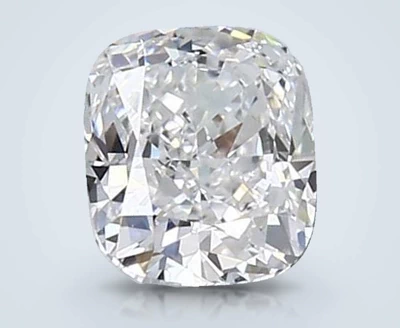
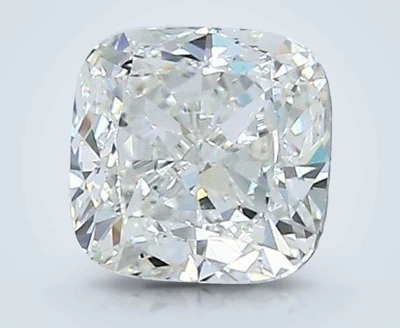
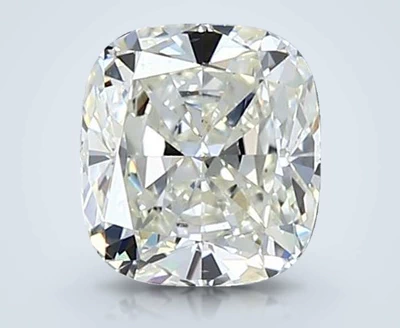
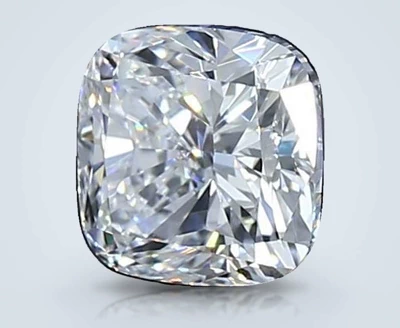
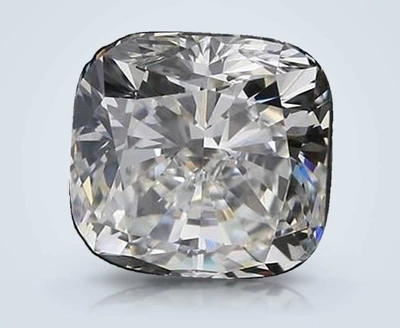
Cushions come in a wider range of outlines than any other shape, and the length to width ratio is the first filter to set. A square cushion (1.00 to 1.04) sits like a softened princess; an elongated cushion (1.15 and up) reads closer to an oval with corners and covers more of the finger. Of the 27,837 natural cushions here, 10,317 are square and 9,709 are elongated at 1.15 or more; in lab grown the split is 24,848 square against 57,305 elongated. Elongated cushions are usually priced a little higher per carat because the demand is newer and the rough is harder to use, which the medians below confirm or deny on the day.
Cushions by length to width ratio (October 17, 2026)
| Outline | Natural in stock | Natural from | Natural median |
|---|
| Square (1.00 to 1.04) | 10,317 | $150 | $1,200 |
| Slightly rectangular (1.05 to 1.14) | 7,811 | $190 | $2,054 |
| Elongated (1.15 to 1.29) | 5,154 | $225 | $3,883 |
| Long cushion (1.30 and over) | 4,555 | $265 | $4,146 |
| All natural cushions | 27,837 | $150 | $2,089 |
| Outline | Lab grown in stock | Lab grown from | Lab grown median |
|---|
| Square (1.00 to 1.04) | 24,848 | $130 | $1,694 |
| Slightly rectangular (1.05 to 1.14) | 4,204 | $130 | $1,440 |
| Elongated (1.15 to 1.29) | 18,370 | $130 | $2,596 |
| Long cushion (1.30 and over) | 38,935 | $130 | $2,108 |
| All lab grown cushions | 86,357 | $130 | $1,947 |
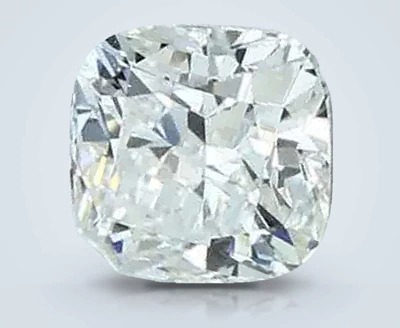
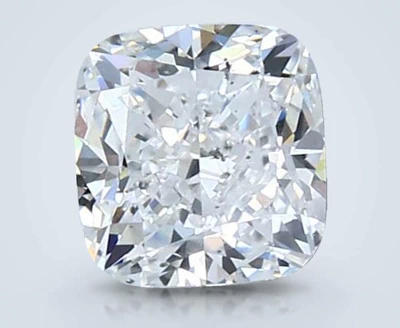
Chunky or crushed ice is the other cushion question, and it is not on the report either. A chunky cushion has large, clearly defined pavilion facets that flash like a round; a crushed ice cushion has many small facets that sparkle like a radiant and hide inclusions better but can go glassy in low light. The 360 HD video on each stone shows which one you are looking at within the first turn, and the two are priced the same on paper, so the choice is pure taste.
Natural Cushion Prices by Carat Band
Natural cushion prices step up at the carat marks like every natural shape, with a median of $1,985 in the one carat band, $11,701 at two carats and $31,537 at three. Because the cushion faces up small, many buyers who want the look of a one carat round choose a 1.11 to 1.49 carat cushion, where the median is $3,470 and 1,604 stones are in stock. The rows below are the whole natural cushion inventory on this page.
Natural cushion diamonds by carat band, prices you pay today (27,837 stones, October 17, 2026)
| Carat band | Starts at | Median | In stock |
|---|
| under 0.50 ct | $150 | $428 | 2,726 |
| 0.50 to 0.89 ct | $285 | $789 | 7,292 |
| 0.90 to 1.10 ct | $505 | $1,985 | 7,218 |
| 1.11 to 1.49 ct | $895 | $3,470 | 1,604 |
| 1.50 to 1.89 ct | $1,580 | $6,167 | 4,151 |
| 1.90 to 2.10 ct | $2,690 | $11,701 | 2,362 |
| 2.11 to 2.89 ct | $3,630 | $19,489 | 935 |
| 2.90 to 3.10 ct | $9,975 | $31,537 | 752 |
| 3.11 to 3.89 ct | $14,795 | $39,416 | 225 |
| 3.90 to 4.10 ct | $23,085 | $58,354 | 178 |
| 4.11 ct and up | $25,730 | $90,187 | 394 |
| All natural cushions | $150 | $2,089 | 27,837 |
Lab Grown Cushion Prices by Carat Band
Lab grown cushions are 86,357 of the stones here and they make the size question moot: medians of $619 at one carat, $1,606 at two and $2,926 at three, so the extra depth of a cushion costs nothing to compensate for. The band with the most stock is 0.90 to 1.10 ct, which is where lab cushion shoppers actually land.
Lab cushions by carat band, prices you pay today (86,357 stones, October 17, 2026)
| Carat band | Starts at | Median | In stock |
|---|
| under 0.50 ct | $130 | $196 | 591 |
| 0.50 to 0.89 ct | $195 | $265 | 2,340 |
| 0.90 to 1.10 ct | $390 | $619 | 14,348 |
| 1.11 to 1.49 ct | $485 | $881 | 3,740 |
| 1.50 to 1.89 ct | $730 | $1,188 | 11,396 |
| 1.90 to 2.10 ct | $940 | $1,606 | 10,950 |
| 2.11 to 2.89 ct | $1,050 | $2,432 | 9,783 |
| 2.90 to 3.10 ct | $1,415 | $2,926 | 9,012 |
| 3.11 to 3.89 ct | $1,375 | $3,703 | 5,520 |
| 3.90 to 4.10 ct | $1,780 | $3,675 | 5,856 |
| 4.11 ct and up | $2,130 | $5,489 | 12,821 |
| All lab grown cushions | $130 | $1,947 | 86,357 |
Go Up a Color Grade, Down a Clarity Grade
Because a cushion holds color, the grade we would protect is color: in one carat natural cushions with VS2 clarity, G starts at $890, H at $860, I at $815 and J at $820, and the warmth of an I or J cushion is visible in a platinum setting where it would pass in a round. Clarity is the grade to relax: the dense faceting, especially in crushed ice stones, hides SI1 inclusions well, and in G to H color SI1 starts at $735 against $925 for VS1. For lab grown cushions color is nearly free (8,591 of the 14,230 one carat lab cushions with VS2 or better clarity are D), so take D to F and buy VS1 clarity, which starts at $425 among D to F stones.
Natural cushions, 0.90 to 1.10 ct: starting price by color at VS2 clarity (1,392 stones) and by clarity at G to H color (2,317 stones)
| Color | Starts at | In stock |
|---|
| D | $995 | 152 |
| E | $980 | 188 |
| F | $925 | 206 |
| G | $890 | 241 |
| H | $860 | 196 |
| I | $815 | 183 |
| J | $820 | 157 |
| K | $670 | 69 |
| All D to K | $670 | 1,392 |
| Clarity | Starts at | In stock |
|---|
| SI2 | $605 | 258 |
| SI1 | $735 | 346 |
| VS2 | $860 | 437 |
| VS1 | $925 | 577 |
| VVS2 | $935 | 345 |
| VVS1 | $1,020 | 298 |
| IF | $1,085 | 55 |
| FL | $5,270 | 1 |
| All FL to SI2 | $605 | 2,317 |
Cushion vs Round, and Natural vs Lab
At one carat and the same G VS1 grade, a natural cushion starts at $1,000 here and a natural round at $1,475; the lab cushion of that grade is $475. Across all grades in the one carat band the median natural cushion is $1,985 and the median natural round $2,834. 27,188 of the natural cushions here are GIA graded and 19,052 have no fluorescence; lab cushions are graded mostly by IGI (80,642 of 86,357). The 1 carat cushion cut diamonds and 1 carat cushion cut lab grown diamonds pages go deeper at that weight.
Cushion cut, 0.90 to 1.10 ct, same grade
| Grade | Natural cushion from | Natural round from | Lab grown cushion from |
|---|
| G color, VS1 | $1,000 | $1,475 | $475 |
| H color, SI1 | $760 | $1,075 | none in stock |
| E color, VVS2 | $1,180 | $1,985 | $520 |
| All grades, 0.90 to 1.10 ct | $505 | $595 | $390 |
Buying a Cushion at Rare Carat
Filter the ratio first, then watch the video for chunky or crushed ice, then check the color at the corners, where a cushion shows warmth first. The AI price score on each stone compares it with similar cushions in stock and flags anything priced above its peers; the quality score out of 18 weighs cut, color and clarity together, and the Rare Carat Ideal filter keeps only the proportions that return the most light. Our gemologists will compare two or three finalists with you by chat or phone, and they earn no commission on the answer.
Rare Carat acts as merchant of record on each order and stocks more than 2 million natural and lab grown diamonds. After purchase the diamond goes to our New York facility, where staff examine it under a microscope and confirm the laser inscription matches the report before it ships. Orders ship free and insured, can be returned free for 30 days, include a free resize in the first year, and every ring carries a lifetime manufacturing warranty. At checkout you can pay through Affirm, Klarna, Afterpay, PayPal Pay Later or Katapult. Rare Carat's rating is 5 out of 5 on Google and on Trustpilot, where it is the highest rated jewelry brand in America.
Counts and prices cover every cushion diamond in Rare Carat inventory on October 17, 2026 that the grid on this page shows, every carat weight: D to K color, FL to SI2 clarity, Good cut or better, GIA, IGI or GCAL graded, with or without video; 27,837 natural (23,791 with 360 HD video) and 86,357 lab grown (74,350 with 360 HD video). Prices include the current savings, applied automatically, and each stone shows its regular price struck through. Each starting price is the lowest priced stone in that group, regardless of grade or weight. Color and clarity ladders hold the weight at 0.90 to 1.10 carats so that only the grade moves the price. Round comparisons use the same day, basis and carat band.