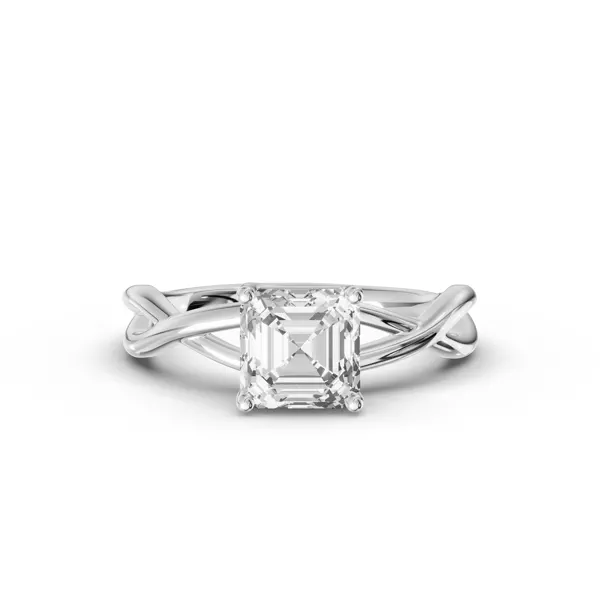
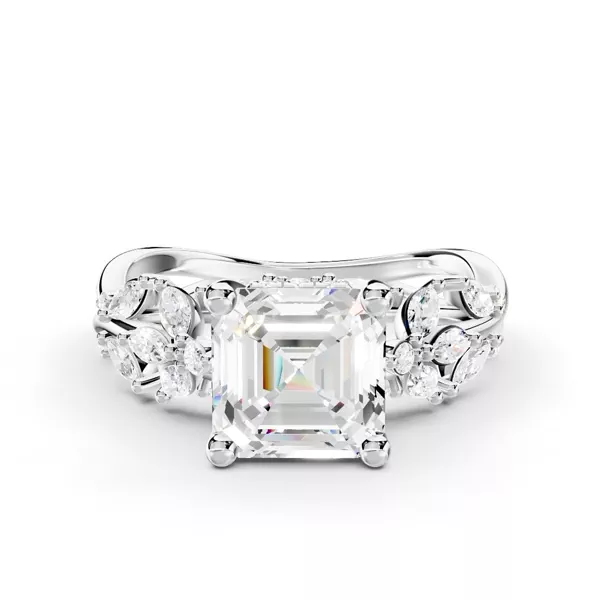
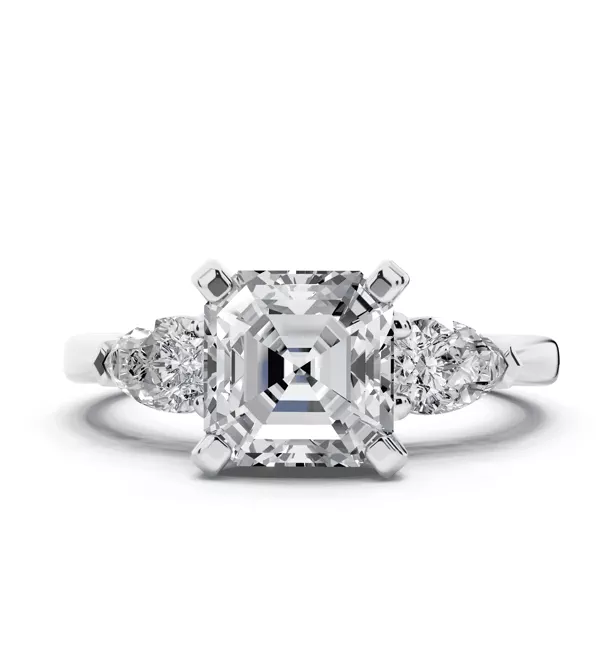
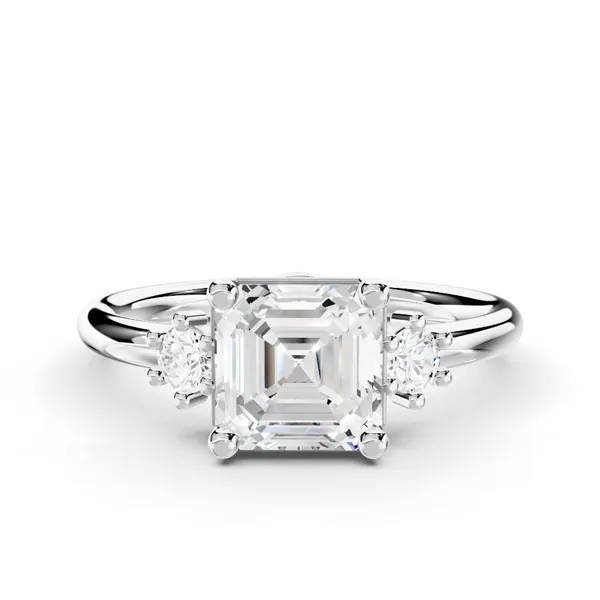
Asscher Lab Grown Diamond Engagement Rings: Where the Price Comes From
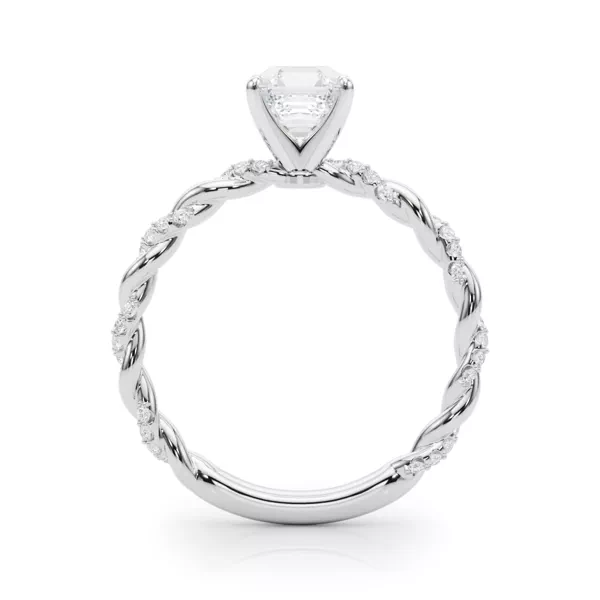
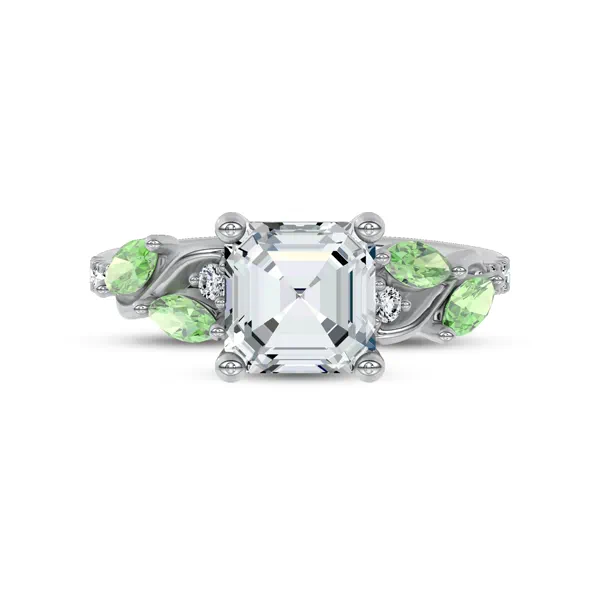
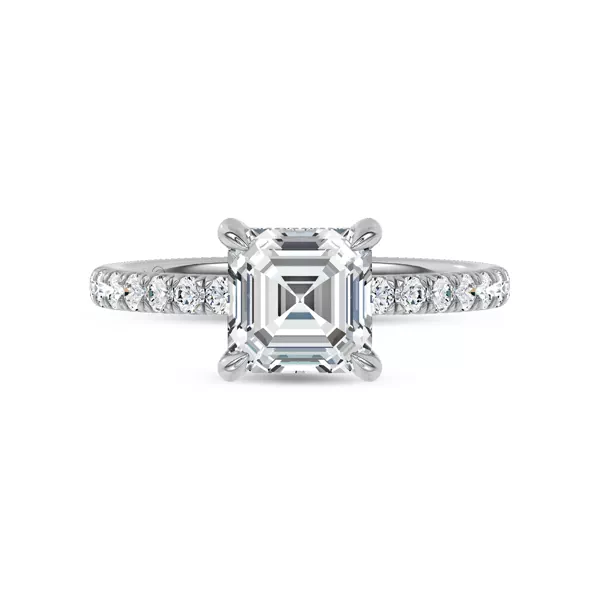
Within the 0.90 to 1.10 carat band, which is the size every design on this page is shown with, a lab asscher starts at $430 and the median sits at $643. Across all sizes the cheapest lab asscher is $130 with the current savings applied. The stone makes up most of what you pay for the finished ring. This page carries 590 or more asscher lab grown diamond engagement ring designs. Each one takes a center stone you choose from 24,591 lab asscher diamonds in stock today, 21,883 of them with 360 HD video. Two examples priced today with a 1 carat lab asscher in 14K white gold are the Bellora hidden halo at $1,400 and the Marie hidden halo at $805, stone included. All of the counts and prices here were taken from inventory on October 17, 2026 and get refreshed on a regular basis.
An asscher is a square step cut with the corners cropped, and its facets meet in a windmill pattern. That pattern makes it the most architectural of the shapes and the one that shows fine color and clarity most plainly. Lab grown asschers reach those grades at little cost. Choosing a lab grown asscher engagement ring comes down to how even the windmill looks on video and which setting frames the octagon.
Lab Grown Asscher Prices by Carat Band
The table below follows the price of a lab asscher as the weight goes up, band by band. It holds every lab asscher in our inventory, so its rows add back up to the 24,591 counted above. Medians climb from $643 between 0.90 and 1.10 carats to $1,703 between 1.90 and 2.10 and $2,887 between 2.90 and 3.10. The deepest row is 1.50 to 1.89 ct, with 4,786 stones in it. A finished ring costs the stone plus whichever setting you put it in, which means a different stone in the same design moves the total along with it. Rows for bands that have a lab grown ring page of their own link to that page.
24,591 lab grown asscher centers sorted into carat bands, prices current on October 17, 2026
| Carat band | Starts at | Median | In stock |
|---|
| under 0.50 ct | $130 | $150 | 256 |
| 0.50 to 0.89 ct | $185 | $268 | 848 |
| 0.90 to 1.10 ct | $430 | $643 | 3,692 |
| 1.11 to 1.49 ct | $525 | $1,014 | 1,021 |
| 1.50 to 1.89 ct | $835 | $1,240 | 4,786 |
| 1.90 to 2.10 ct | $1,070 | $1,703 | 3,553 |
| 2.11 to 2.89 ct | $1,240 | $2,578 | 2,349 |
| 2.90 to 3.10 ct | $1,735 | $2,887 | 2,442 |
| 3.11 to 3.89 ct | $1,960 | $3,625 | 685 |
| 3.90 to 4.10 ct | $2,155 | $3,617 | 1,962 |
| 4.11 ct and up | $2,685 | $5,498 | 2,997 |
| All lab grown asschers | $130 | $1,859 | 24,591 |
Which Color and Clarity an Asscher Needs
Grade moves the starting price very little in the 0.90 to 1.10 carat band. With clarity held at VS2 or better, a D color lab asscher starts at $490 against $465 for a G. That difference is small enough that color is not where you save or spend on a lab asscher ring, and 99 percent of the lab asschers on that color ladder are D to F in any case. Clarity reads the same way from the other side, since with color held at D to F a VS1 starts at $490 and a VVS2 at $540. In practice the center to buy is D to F at VS1 or better, and whatever you would have spent on grade can go toward weight and toward the setting.
Where a 0.90 to 1.10 ct lab asscher starts, by color at VS2 or better clarity (3,581 stones) and by clarity at D to F color (3,652 stones)
| Color | Starts at | In stock |
|---|
| D | $490 | 2,357 |
| E | $430 | 1,009 |
| F | $440 | 178 |
| G | $465 | 26 |
| H | $480 | 11 |
| I | n/a | 0 |
| J | n/a | 0 |
| K | n/a | 0 |
| All D to K | $430 | 3,581 |
| Clarity | Starts at | In stock |
|---|
| FL | $1,015 | 135 |
| IF | $1,010 | 227 |
| VVS1 | $700 | 777 |
| VVS2 | $540 | 1,219 |
| VS1 | $490 | 829 |
| VS2 | $430 | 360 |
| SI1 | $440 | 100 |
| SI2 | $440 | 5 |
| All FL to SI2 | $430 | 3,652 |
Comparing a Natural Asscher Center
A natural asscher in the same setting puts the ring on a different budget. The one carat lab grown median is $643 against a natural median of $2,046. Hold the grade at G color VS1 and the starting prices read $465 lab grown and $1,215 natural. With a natural stone you are paying for scarcity and usually a GIA report, since 8,761 of the 8,987 natural asschers on the grid carry one. For the same price a lab stone gives you more weight and a higher grade. The same designs priced with a natural center sit on the asscher natural diamond engagement rings page, and the asscher diamonds grid holds both.
Lab against natural asscher, 0.90 to 1.10 ct, grade held equal
| Grade | Lab grown from | Natural from | Natural median |
|---|
| G color, VS1 | $465 | $1,215 | $2,007 |
| H color, SI1 | none in stock | $845 | $1,802 |
| E color, VVS2 | $540 | $1,360 | $2,558 |
| All grades, 0.90 to 1.10 ct | $430 | $580 | $2,046 |
Which Setting Flatters an Asscher
Four prongs set on the cropped corners, or a bezel that traces the octagon, are the two settings that leave an asscher's windmill pattern fully open to view. Either one suits an asscher lab grown engagement ring. Art deco inspired designs, with baguette side stones or a geometric halo, are where this shape looks most at home. A lab asscher at two carats costs so little that the stone can also carry a plain band on its own.
At one carat a lab asscher measures roughly 5.5 mm on a side, and that is about the size of stone the asscher lab grown diamond engagement ring designs here are pictured with, in 14K white gold. Each design also comes in yellow gold, rose gold and platinum, with the stone you pick shown in place. Beside each stone, the AI price score compares it with similar lab asschers in stock and marks any that costs more than its peers. The quality score out of 18 weighs cut, color and clarity in one number. Our gemologists are paid no commission. Once you have narrowed the field to two or three asscher finalists, they will go through the videos with you by chat or phone.
How Buying an Asscher Lab Grown Diamond Ring from Rare Carat Works
The terms do not change between the cheapest lab asscher on this page and the most expensive. Rare Carat sells direct as a fine jewelry retailer and is the merchant of record on every order. It keeps more than 2 million natural and lab grown diamonds in stock to choose a center from. Shipping is insured and free, returns are free within 30 days, the first resize is free for a year, and the lifetime manufacturing warranty covers the setting. Before the ring ships, our staff in New York examine the diamond under a microscope and compare its laser inscription with the grading report. At checkout you can pay with Klarna, Afterpay, PayPal Pay Later, Katapult or Affirm. Google and Trustpilot both rate Rare Carat 5 out of 5, and Trustpilot also ranks it the highest rated jewelry brand in America.
Stone counts and prices take in every lab asscher diamond that Rare Carat had in inventory on October 17, 2026 on the same filters as the diamond grids. Those are D to K color, FL to SI2 clarity, Good cut or better, GIA, IGI or GCAL graded, with or without video. That gives 24,591 lab grown stones (21,883 of them with 360 HD video) and, for the comparison, 8,987 natural. Every price is today's price with savings applied, and the regular price appears struck through on the product page. A starting price means the cheapest stone in its row at any grade. Ring prices are for the complete rings this page carried on October 17, 2026, each in 14K white gold with the named center stone. The number of designs is this page's own count. The color and clarity ladders keep weight between 0.90 and 1.10 carats so that the price differences on them come from grade and not from weight.